Micro treatment plant or septic tank: what it changes for you
Many people do not know which one they have in the garden. You can see the difference, hear it, and it changes which product you need.
You were told ‘there's a septic tank’, and you maintain it with whatever you found on the shelf. There is a good chance it is not a septic tank at all. This is not a detail: the two do not work the same way, and neither do the products.
Three clues to find out which one you have
The noise
A micro treatment plant has a compressor that runs in cycles, day and night. A septic tank is silent.
Electricity
A micro treatment plant is connected to the fuse box. A septic tank is not.
The garden
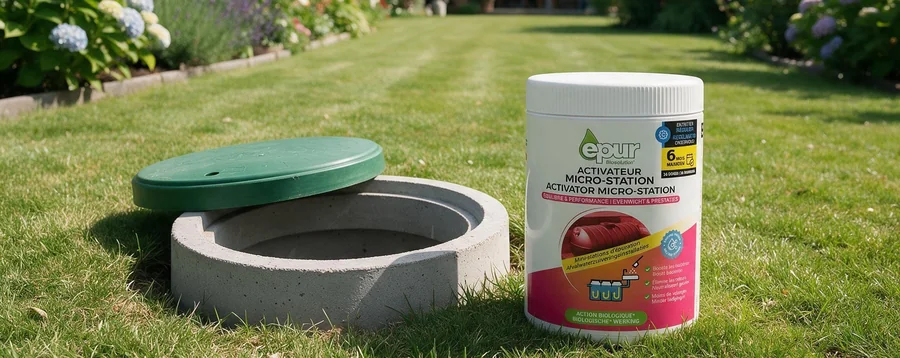
A septic tank is almost always followed by a soakaway or drainage field, an area that cannot be paved over. A micro treatment plant usually does not have one.
What sets them apart
A septic tank works without oxygen, slowly, and the soil finishes the treatment. It is basic, and it forgives irregular use.
A micro treatment plant pumps in air. Far more bacteria work there, far faster, in a small volume. It is efficient, and more sensitive: a power cut or a long absence has an immediate effect.
Maintenance is not the same
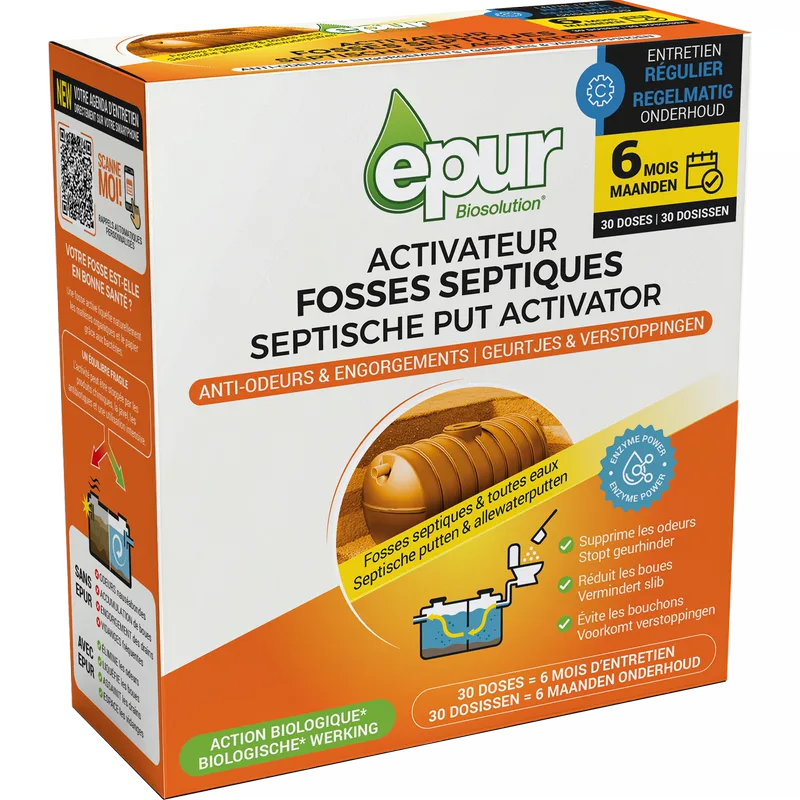
- Septic tank: one dose of activator per week, into the toilet, at bedtime.
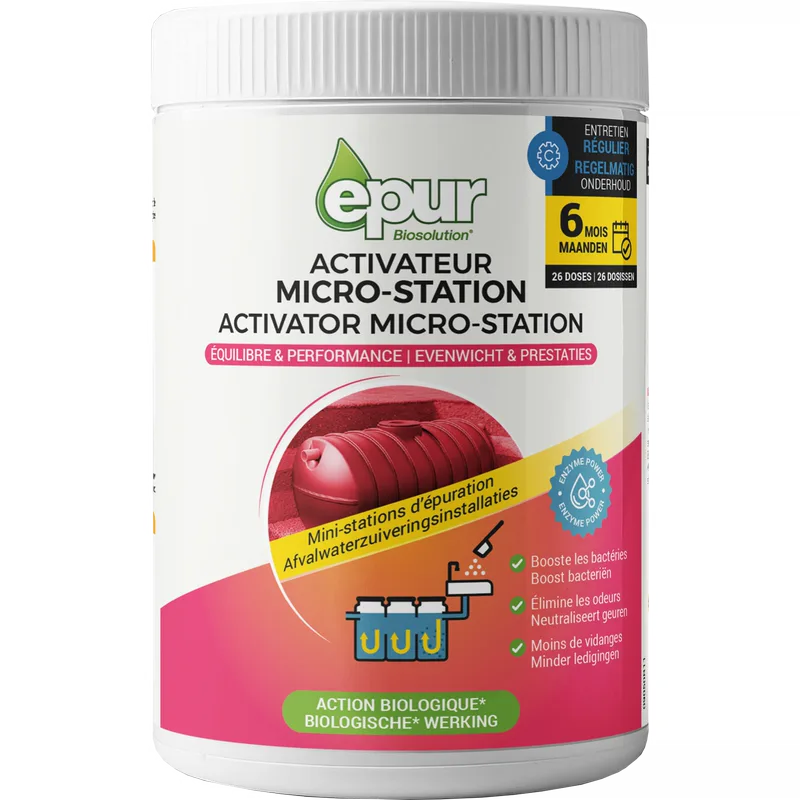
- Micro treatment plant: one dose per week too, but mixed in a glass of warm water and poured into the sink, preferably at the end of the day. 1 to 4 people: 1 dose. Over 4 people: 2 doses.
Three habits specific to micro treatment plants
Never switch off the compressor, even when you are on holiday. Without air, the bacteria die within a few days.
Avoid running boiling water in the hours after the dose.
In case of blockage, dilute the entire contents of the tub in a bucket of warm water and pour directly into the micro treatment plant.
What applies to both
The same things to avoid, which matter even more for a micro treatment plant: no wipes, no frying oil, no solvents, and bleach only sparingly. And both need emptying: maintenance makes emptying less frequent, it does not do away with it.
Still not sure?
The deed of sale or the planning permission file describes the installation. Otherwise, give us a call: two questions are usually enough.
The doses for our products are on their packaging, and that is what counts. If swallowed or splashed, call the Poison Centre on +32 70 245 245 and keep the packaging to hand.